No national midwife standards. No guarantee your midwife is trained.
In the United States, home birth safety is left to chance. There are no national standards, just a patchwork of state laws that vary widely in who can call themselves a midwife, what training they need, and which births they may attend. Families assume credentials mean competence. In many cases, they don’t.

Not All “Midwives” Are the Same
In the United States, the title “midwife” covers people with graduate degrees and people with no formal education at all. A Certified Nurse-Midwife or Certified Midwife completes an accredited graduate program. A Certified Professional Midwife can qualify through apprenticeship, with no college degree and no midwifery school (ACNM comparison). The CPM credential offers the appearance of legitimacy without the foundation of accredited training, and it carries a built-in conflict of interest, since income often depends on births staying out of the hospital. Without national standards, families are left to assume all midwives are equally qualified. They’re not, and that confusion puts lives at risk.

Training and Standards Vary
The U.S. has multiple types of midwives, and not all of them meet international standards for education and training.
Read: Inconsistent Standards
A System Designed to Confuse
The lines between types of midwives are blurred, making it harder for families to tell accredited care from undereducated practice.
Read: Organized Confusion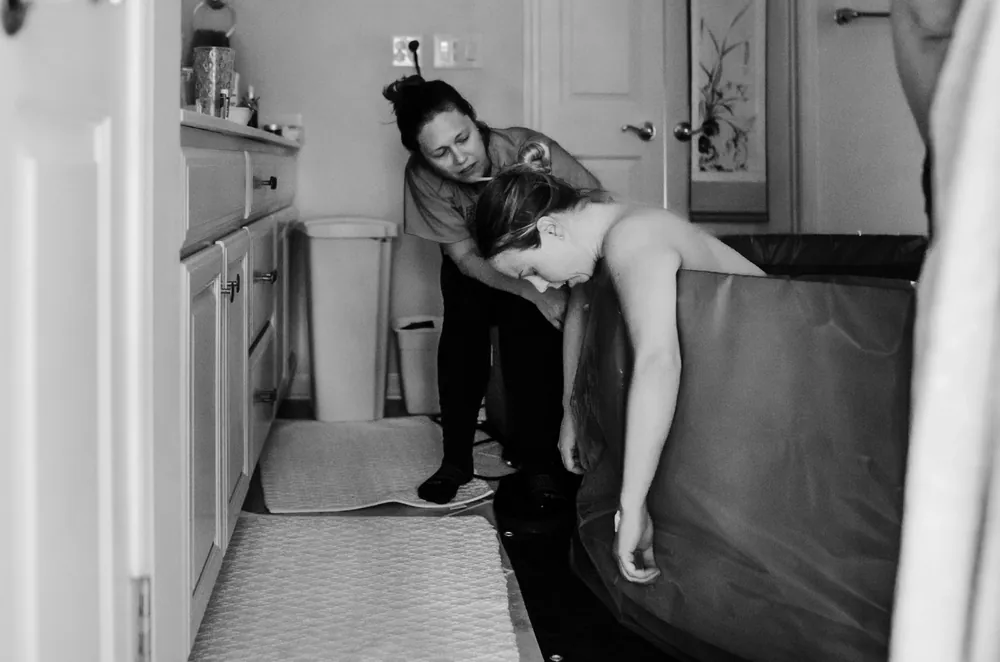
A Conflict of Interest
Families assume their midwife will “just transfer” if needed. The financial and reputational costs of doing so can be significant.
Read: Conflict of Interest
The Evidence.
In states that allow midwives with lower educational standards to practice, worse outcomes have followed. Research shows increased rates of neonatal death and preventable birth injuries when care is provided by midwives who do not meet national or international training standards.
Poor outcomes are especially pronounced when high-risk births, such as breech birth or multiples, are attempted at home.
Learn more: Outcomes and Risks
The Illusion.
When states license undertrained midwives, it gives the public a false sense of security and signals that these providers are qualified, even when they are not.
Families assume that licensure ensures proper education, clinical competency, and emergency backup. But in many states, midwives can be licensed with minimal training, no degree requirement, and little to no integration with hospitals. Once licensure is granted, there is often no meaningful way to limit scope or enforce accountability. The state gives its stamp of approval, but loses the ability to protect the public.
Learn more: Oversight Failure
The Narrative.
Alongside the safety concerns and regulatory gaps, there is a carefully crafted narrative that portrays all midwifery as inherently safe, empowering, and equivalent. These messages focus on freedom, feminism, or tradition, but they rarely mention training, oversight, or outcomes.
To understand the full picture, we have to examine the arguments being used to defend an unsafe system.
Learn more: Common Arguments
The Stories.
Hear from real families whose home births ended in tragedy, attended by midwives whose credentials lacked formal education, clinical training, or oversight. Their accounts, and the investigations that followed, show what is at stake when standards are missing.
Watch the storiesHome Birth Safety FAQs
Is this about banning home birth?
No. This is about making home birth safer. We believe families have the right to choose where they give birth, but that choice must be informed, and the providers attending those births must meet reasonable, evidence-based standards. Holding all midwives to consistent safety expectations is the best way to preserve both autonomy and accountability.
Are home births safe for people with high-risk pregnancies?
No. Home birth carries significantly higher risks in high-risk pregnancies, including breech presentation, twins, prior cesarean, preterm labor, and others. Even the best-trained midwives cannot perform emergency surgery or manage sudden complications at home. The safest approach is to restrict out-of-hospital birth to low-risk pregnancies under the care of qualified, licensed providers with clear transfer plans. It is deeply concerning when any type of midwife chooses to attend high-risk births at home, as this ignores well-established medical guidelines and increases the chance of preventable harm. Safe midwifery means respecting the limits of out-of-hospital care.
I read an international study that showed home birth was safe. Doesn’t that prove it’s fine here too?
No. Studies from countries like the Netherlands, Canada, and the UK often show that home birth can be safe within their systems, but those systems have strict national standards, highly educated midwives, and full hospital integration. Midwives in those countries meet consistent training requirements, follow risk-out guidelines, and work directly with the healthcare system to ensure rapid transfer when needed. The U.S. lacks national midwifery standards, allowing a wide range of credentials, including some with no formal medical education. Many home births here are attended by providers who are not integrated into hospitals and who may not meet international benchmarks. Research from outside the U.S. cannot justify the current home birth model here. The context is different, and so are the outcomes.
In U.S. data, planned home births had about four times the neonatal death rate of hospital births attended by certified nurse-midwives.
If I support abortion rights, shouldn’t I support unregulated home birth?
No. Autonomy and reproductive freedom do not mean endorsing unsafe care. Many people who support abortion rights also believe strongly in protecting patients from harm through clear standards, qualified providers, and regulatory oversight. Just as abortion access requires trained clinicians, hospital access, and informed consent, so does safe birth. Unregulated home birth, especially when attended by undertrained or unlicensed providers, often hides behind the language of “choice” while putting families at unnecessary risk. Supporting reproductive justice means ensuring all pregnancy outcomes are safe, respectful, and rooted in evidence-based care. Freedom without safety isn’t freedom at all. It’s abandonment.
Why is Certified Professional Midwife (CPM) licensure dangerous?
Licensing CPMs gives the appearance of safety without requiring the education or clinical training needed to ensure it. In most states, CPMs are not required to have hospital-based experience, malpractice insurance, or participation in outcome reporting. Legal recognition can mislead families into believing that all midwives meet rigorous standards. Studies show that outcomes for CPM-attended home births are significantly worse than for CNM-attended births, including higher neonatal mortality.
Sources: NARM eligibility requirements, NARM apprenticeship (PEP) route, ACNM credential comparison. Read more: Outcomes and Risks.
Why not just improve CPM education?
Improving education might seem like a good compromise, but the CPM credential has remained largely unchanged since it was created in the 1990s. This issue was addressed during the U.S. Midwifery Education, Regulation, and Association (US MERA) collaboration, and CPM leadership ultimately declined to adopt internationally recognized education benchmarks. Continuing to license this credential reinforces a model that refuses to evolve. Families deserve a clear, evidence-based standard for the people they trust as midwives.
Read more: Do CPMs meet international (ICM) standards?
Why hasn’t Certified Midwife (CM) licensure caught on, and should we still consider it?
Certified Midwife (CM) licensure has been limited by state-by-state regulatory barriers and overshadowed by the growth of the CPM credential, an easier-to-obtain credential with a lower standard that diverted focus from safer alternatives. Still, the CM remains a strong, underused option. It provides a non-nurse route to midwifery that meets international standards for education and clinical training. Promoting CM licensure offers a credible alternative when sunsetting CPM laws, preserving midwifery for non-nurses without compromising safety.
Read more: CNM vs CM vs CPM
Good Midwifery Makes Home Birth Safer.
Safe, accountable midwifery is rooted in education, clinical training, and integration with the health system. Here is what it looks like.
Learn more: Good Midwifery